Latest AI News
Android 17 launches with new multitasking tools as Google expands Gemini features
Google on Tuesday released the final version of itsAndroid 17 operating system, as well as its counterpart for smartwatches, Wear OS 7. The latest release, which arrives first on its own Pixel devices, is also accompanied by a Pixel Drop, bringing new features that include support for the latest AI models, like the music generation model Lyria 3, the multimodal Gemini Omni, and speech-to-translation tools for the Pixel 10a with AudioLM. The latest feature release underscores Google’s strategy of using its Android and Pixel devices to showcase its latest AI technology. While its rival Apple is focused on catching up in AI with September’s public launch of AI upgrades to Siri and iOS 27, Google’s Android 17 is focused on its newest AI models, Gemini’s role in creation, communication, and other device experiences. In today’s Pixel Drop, Android Quick Share’s file-sharing feature will become compatible with Apple’s AirDrop on older Pixel 8a and 9a devices. Plus, Gemini Omni will now let you edit videos in a conversation, while Lyria 3 lets users create music tracks with text prompts and/or images in the Gemini app. Pixel 10a devices will also get better speech-to-speech translation tools with AudioLM. Other phone features are arriving, too, such as the ability to record a personalized outgoing audio message for callers when you can’t answer. Plus, the “Take a Message” feature will arrive in more global markets. The Pixel Drop brings emergency detection features to the Google Pixel Watch, as well, meaning that if the watch detects a car crash, fall, or lack of pulse, it will automatically contacts emergency services and your selected emergency contacts. Beyond AI, Android 17’s larger update allows users to take advantage of features like a “bubble bar,” which is a new user interface element that lets you organize, move, and then quickly access recent apps that appear as bubbles at the bottom of your screen. The feature is designed to help speed up app interactions and aid in multi-app workflows. Social media users may like Android 17’s new feature that lets them record themselves with the selfie camera and phone screen simultaneously for screen reaction videos that can be shared on platforms like TikTok, YouTube, Instagram, and others. Parental controls and security features were also improved in this latest release, adding a “Mark as Lost” feature in Find Hub, Live Threat Detection, and other threat defenses, alongside screen time limits and content filtering tools that can now be set with a PIN without linking a Google account. A new foldable gaming mode offers a 50/50 layout with a dynamic gamepad. Meanwhile, watch owners can now receive live updates from phone apps that mirror to the Pixel Watch. Smartwatches will also work better withGoogle’s upcoming AI glassesand other hardware, such as headphones. This summer, Wear OS will introduce more Gemini Intelligence features, like tools for making personalized widgets just by describing them, and it will be able to offer “Personal Intelligence” by connecting your Google apps and chat history with Gemini. Battery life improvements — up to 10%, Google claims — as well as multi-step automation will also arrive in the new Wear OS.
View

Meta Introduces AI Mode on Facebook With AI-Powered Search for Public Posts, Reels
Meta has introduced a new set of artificial intelligence features for Facebook, including AI Mode, a search experience that generates answers using information shared publicly across the company's platforms. The update also brings additional AI-powered tools for photo and video creation, along with new content suggestions. The company said the features are designed to help users discover information, create content and interact with Facebook more efficiently. Some of the new creative features rely on camera roll suggestions, which remain optional and can be disabled by users.
View
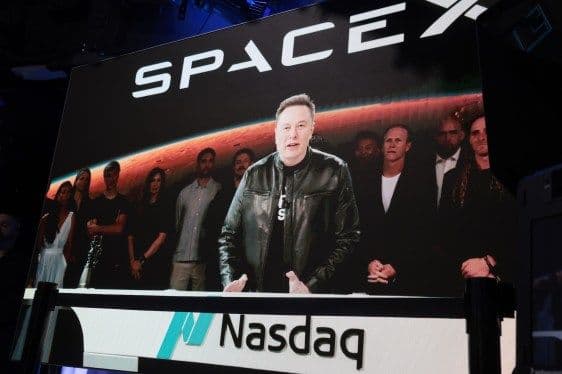
SpaceX to acquire Cursor for $60B in stock, days after blockbuster IPO
SpaceX hasagreedto acquire AI coding startup Cursor in a $60 billion stock deal, just a few days after the space company’s historic IPO and less than two months afterannouncing a tie-up between the two. The deal is meant to help SpaceX’s AI division — built around Elon Musk’s AI company xAI, which SpaceX merged with earlier this year — catch up to the major AI labs. Despite being a centerpiece of its IPO promises, SpaceX’s AI division has been in the midst of a restructuring after running into repeated controversies, like allowing users to generate non-consensual deepfakes of women and children. SpaceX said Tuesday that the acquisition is likely to close in the third quarter of this year. Before SpaceX came knocking, Cursor was on track to close a $2 billion funding round from the likes of Andreessen Horowitz, Thrive, and Nvidia that would have valued the AI coding startup at $50 billion, TechCrunch hasreported. Musk’s company announced a curious deal in April ahead of its IPO: it would either buy Cursor for $60 billion in stock, or pay a $10 billion break-up fee if the deal fell through. Cursor was growing fast when this deal was first announced. But one source told TechCrunch at the time that the $2 billion it was planning to raise wasn’t going to be enough to help it break even. That’s despite the startup previously raising $900 million in a Series C in June 2025, and another $2.3 billion in late 2025. Founded in 2022 as Anysphere, Cursor has been on a meteoric rise as AI-powered coding took off over the last two years. It went through OpenAI’s startup accelerator in 2024 before raising enough money to wind up with a price tag of around $29 billion before the SpaceX deal was announced. Signs of SpaceX’s interest in Cursor appeared earlier this year when xAI hired two of the startup’s senior engineering leaders. Then, in April, Business Insider reported that xAI had decided to rent out some of itsdata center capacity to Cursor— a hint of the similar deals that SpaceX struck with Anthropic and Google ahead of its IPO this year. Those conversations between SpaceX and Cursor quickly evolved into the deal that is being finalized now. The deal also happened at the same time that xAI was falling apart. All 11 of Musk’s co-founders in xAI had left the company by the end of March, and Musk publicly admitted that xAI “was not built right [the] first time around” and that he was rebuilding it “from the foundations up.” This followed xAI’s Grok chatbotcalling itself“MechaHitler” in 2025, and allowing users to generate nudes and sexual deepfakes of women and childrenearlier this year. SpaceX told investors in its IPO filings that behavior like this is a risk to its business, and the company currently faces a number of legal challenges as a result of these actions. xAI’s teardown started as SpaceX started moving toward what would become the biggest IPO in history. In that process, SpaceX and its bankers pitched investors on the idea that the company faced a total addressable market of around $28 trillion. Nearly all of that — $26 trillion — was centered around the company’s AI efforts. SpaceX told investors that it sees a potential $2.4 trillion AI infrastructure business (including its stated plans to build a satellite constellation that handles AI compute) and a $22.7 trillion opportunity in “enterprise applications.” SpaceX is now leaning on Cursor to deliver on some of these promises. But the prospect of acquiring the startup must have seemed even easier to swallow post-IPO: Since going public last Friday, SpaceX’s stock has gone from its IPO price of $135 per share to more than $200 per share in pre-market trading as of Tuesday morning, adding nearly $1 trillion — or roughly 16 Cursors — to its valuation in the span of just a few days.
View

Probably raises $9M to build a more reliable kind of AI
As LLMs have grown more powerful, hallucinations have proven stubbornly difficult to avoid. Errors pop up in even the smartest models, and while there are ways to catch those errors, the industry is still figuring out the best way to do it. Probably, which just raised $9 million in seed funding from Andreessen Horowitz, is trying to build a more rigorous way to catch those errors. As founder Peter Elias (pictured above) puts it, the company’s goal is to prevent hallucinations and simple factual errors from ever reaching the user, and achieve the kind of 99.99% accuracy that’s common in deterministic systems but much more difficult to reach with AI. As it turns out, bringing LLMs to that level of accuracy requires rethinking many of the basic assumptions of AI engineering. Probably’s first product is a data science tool, built to produce quick answers from complex datasets. Each result comes with a citation and an audit trail for how it was developed, an increasingly common practice among AI tools. But keeping errors from creeping into those summaries required an elaborate harness system that Elias describes as a “data science mech suit.” The LLM’s first-pass answers are checked against a deterministic validator system, which bounces back any results that don’t match the dataset. Crucially, the LLM has been trained against the validator, and the whole system is optimized for fast and accurate answers, the company said. “What we learned building this was that the better your harness engineering is, the weaker the model can be,” Elias says. “If you can refine the context enough, the model does not have to work very hard to do the right thing. Basically, it’s an exercise in reducing ambiguity.” That allows Probably’s data science tool to run on significantly smaller AI models. Elias says the current version is running on a model that’s “four classes weaker than the frontier models,” which means it can be run on local hardware (that is, a desktop computer instead of a data center), which reduces a huge amount of the token costs associated with AI use. It’s a welcome idea at a time when token costs are rising and many customers arereassessing their AI budgets. And, Elias’ idea doesn’t end with data science, as the same engine can be extended to cover use cases like accounting or medical services — as Elias puts it, “any precision-sensitive use case.” “I think it’s really interesting that the big AI labs have not even attempted to do this,” Elias says. “They’re incentivized not to, because they make money the more times you have to correct the model.”
View

SpaceX passes Amazon as valuation balloons to $2.7T
SpaceX passed Amazon to become the fifth-most valuable company in the world, after its stock price climbed 20% on Monday and more than 8% in early trading Tuesday, pushing its valuation past $2.7 trillion. That’s despite Amazon turning a $78 billion profit in 2025 on $717 billion in sales last year, compared to SpaceX’s $4.9 billion loss on $18.7 billion in revenue. SpaceX has recently added new revenue streams in the form of compute leasing deals with Anthropic and Google, though, and the company has added $1 trillion to its valuation since going public on Friday. Tuesday’s stock price jump came after SpaceXannouncedit is acquiring AI coding startup Cursor in an all-stock deal worth $60 billion. SpaceX first revealed a collaboration with Cursor in April, at a time when CEO Elon Musk said his AI company xAI — now a part of SpaceX — “was not built right [the] first time around” and that he was rebuilding it “from the foundations up.” SpaceX’s historic IPO saw it debut with a valuation of around $1.7 trillion, and the transactionraisednearly $86 billion for Musk’s company. SpaceX only made about 4% of its total shares available for trading, which experts predicted would make the stock more susceptible to wild swings.
View
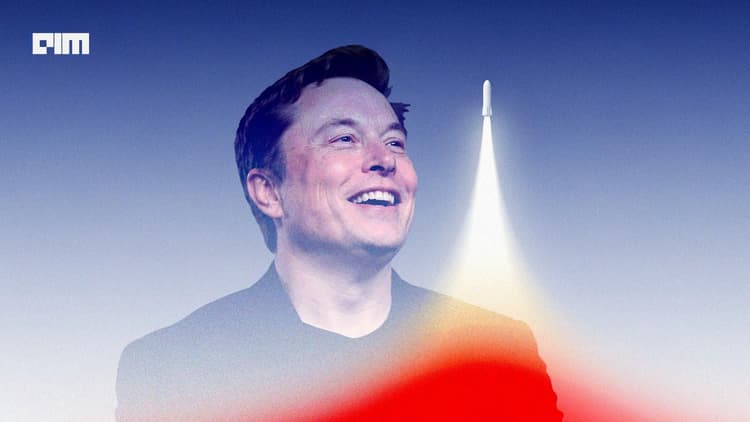
From Near Bankruptcy to the Biggest IPO in History
The company that once survived on a single successful rocket launch is now at the centre of a trillion-dollar bet on space, AI, and humanity’s future beyond Earth.
View
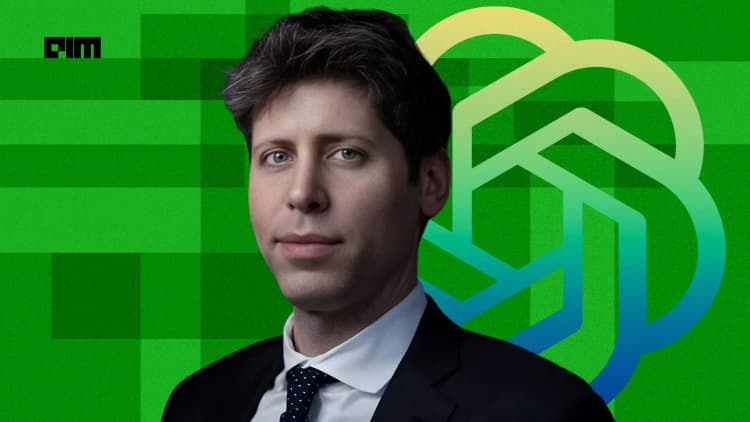
OpenAI Spent $34 Billion in 2025: Report
OpenAI generated $13.07 billion in revenue but incurred a $20.9 billion operating loss.
View

At One Point, Cursor Accounted for Up to 50% of Anthropic Revenue: Report
The relationship later came under pressure as Anthropic expanded into AI coding tools, prompting Cursor to accelerate development of its own models.
View

Why a Cybersecurity Company Entrusted Bengaluru GCC With Worldwide AI Product Decisions
N-able says Bengaluru teams now build AI features and shape cybersecurity product decisions for global markets.
View
SpaceX to Acquire Cursor in $60 Billion All-Stock Deal
The acquisition formalises a relationship that began earlier this year between the two companies.
View
Wipro to Certify 10,000 Employees on Anthropic's Claude Models as it Launches Dedicated AI Centre
Wipro is deepening its enterprise AI push with a dedicated centre for Anthropic's Claude models and plans to certify 10,000 employees over the next 18 months.
View
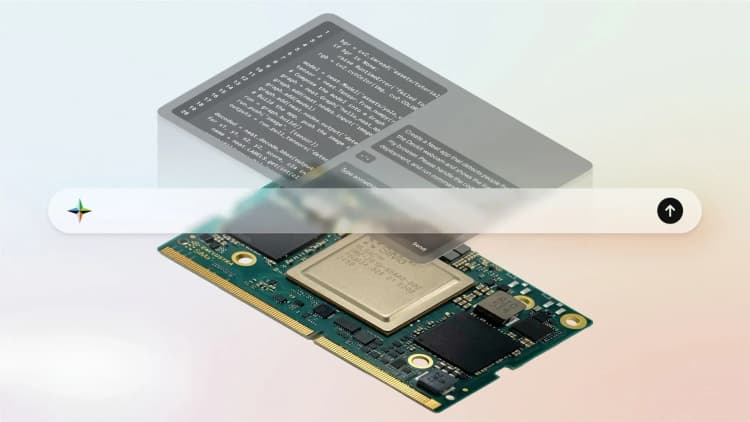
Deeptech Startup SiMa.ai Unveils Agentic Software, SoM to Reduce Reliance on NVIDIA GPUs
The company says its new platform cuts the time to deploy physical AI from months to days.
View