Latest AI News
ChatGPT’s market share slips below 50% for first time
More than three and a half years after ChatGPT’s initial release, AI assistants are now used by millions of people worldwide, and the competitive landscape is changing fast. While OpenAI’s chatbot is still the most popular assistant globally, its market share has dipped below 50% for the first time as users are migrating between different assistants like Google’s Gemini, Anthropic’s Claude, and xAI’s Grok, according to analytics firm Sensor Tower’s State of AI Report for 2026. ChatGPT’s growth has been impressive. It became the fastest app ever to reach 1 billion monthly users, as Sensor Towerreportedthis month. Notably, OpenAI counts weekly active users, and it last reported900 million of them in February. The chatbot still remains the most popular AI assistant worldwide with over 1.1 billion monthly users, followed by Gemini with 662 million and Claude with 245 million. Until January, ChatGPT commanded over 50% market share, but by May’s end, it had fallen to 46.4% thanks to the rise of Gemini (27.7%) and Claude (10.3%). Other assistants, including Grok, Perplexity, DeepSeek, and Meta AI, have less than 5% market share. Sensor Tower’s State of AI Report also found that users are increasingly willing to switch between assistants. Specific events appear to accelerate that behavior: OpenAI’s deal with the U.S. Department of Defense (DoD) in February triggered ameasurable spike in uninstalls, for example — suggesting brand trust and values alignment matter to users, not just features. While Gemini’s momentum is largely due to its integration with Google’s broader ecosystem of tools, Anthropic’s Claude has gained a strong reputation for productivity use cases and is closing in on ChatGPT’s user-retention rate. In the first half of 2026, people are on pace to download nearly 2.3 billion AI apps and spend over $4.2 billion on them, according to Sensor Tower estimates. That compares to $1.83 billion in spending in H1 2025 — a jump that suggests the industry is shifting its focus from pure growth toward monetization. That said, both download and spend growth rates have decelerated, an indicator that the market may be maturing even as absolute numbers climb. Regionally, Asia recorded the first download decline of 3.3% in Q1 2026, driven by dips in China and India. Despite leading globally in total downloads, Asia trails North America and Europe when it comes to in-app spending — a split that matters for companies deciding where to invest in premium features and monetization. In the U.S., users are gravitating toward AI assistants for productivity tasks and spending more on premium features. Across platforms, average revenue per user has grown industry-wide, but Claude is standing out. Thirteen percent of Anthropic’s users are paying for a subscription plan — a conversion rate that leads the field and will be a metric worth watching for investors evaluating which AI businesses are building lasting revenue. Sensor Tower estimates that the hours spent on AI apps will have increased from 17.2 billion hours in H1 2025 to roughly 36 billion hours in H1 2026. The top three assistants command 89% time spent on AI assistant apps. Meanwhile, adjacent categories like AI companions or AI content-generation apps remain fragmented and wide open to competition, which represents both a risk and an opportunity depending on which players move first. OpenAI started experimenting with ads in ChatGPT in February. According to Sensor Tower, the company has scaled the number of ads gradually, along with the share of users who see them. By May, an average of 17% of daily users were being served ads — a number to watch as ChatGPT’s monetization strategy evolves beyond subscriptions. Software and shopping are the largest advertiser categories in ChatGPT so far, followed by media and entertainment and food and dining. As ChatGPT deepens its shopping integrations, it is increasingly sending referral traffic to retailers like Target, Walmart, and Costco. Amazon, which has blocked ChatGPT’s web crawlers, has seen stagnant referral traffic from the platform as a result. That creates an opening for others. Sites like Walmart have embedded their own AI assistants to help shoppers find products. While Amazon’s Rufus has seen flat user growth, Walmart’s Spark has been gaining ground. Sensor Tower also noted that Amazon shoppers who used Rufus spent more time in the app and converted at higher rates than those who didn’t, hinting that on-platform AI can meaningfully influence purchasing behavior when users actually engage with it.
View

Robinhood’s note on 10% layoffs shows blaming AI isn’t cutting it
It appears using AI as a cover story for cutting jobs is fast falling out of fashion. Unlike many of his tech industry peers who havecut thousands of jobs this yearciting the need to restructure their teams to make the most of AI, Robinhood’s CEO Vlad Tenev conspicuously made no mention of AI in hisnote to employeesannouncing that the company is letting go 10% of its full-time employees, or about 290 people. Nor did the company’s regulatoryfilingannouncing the move, which instead framed the cuts as a restructuring exercise. Still, Tenev did say the company would use “frontier technologies to push our execution even further,” which sounds like a conscious effort to avoid even naming AI. Which isn’t surprising: Sentimentagainst AIand related infrastructure projects has beentrending lowereven as a small minority of tech executives makeridiculous bank. But Tenev did add to the ongoing narrative that it’s now necessary for companies to operate with smaller teams and “flatter organizational structures,” writing: “We cannot default to operating as a heavily-layered organization. We must be a lean, hyper-focused team where every single individual is empowered to make a massive impact.” We’ve seen companies of various stripes, fromAmazon,Block,Coinbase,GitLab, andIntuitemploying similar language in their layoff announcements, indicating that large teams, bureaucracy, and siloed departments are now seen as undesirable line items at a time when AI tools promise to significantly improve productivity. Some even think it’s a tacit allusion to the fact that tech companiesover-hiredfollowing the COVID-19 pandemic, and are now scaling back as expenses begin to pile up — especially those associated with massive AI usage. Regardless, these companies are doing quite well. Tech stocks have surged broadly, spurred by recordrevenues, improving profit margins (GitLab reported88% gross marginlast month), skyrocketing demand forcloud services, and the belief that the billions being poured into data center projects willproduce returns that are orders of magnitudes higher. Robinhood itselfreporteda 15% improvement in first-quarter revenue in April, and the company said its second quarter is looking better thanks to rising prediction market fees, subscription revenue, and strong equity and option-trading volumes as markets stabilize. The company said on Tuesday it is also closing “a small number” of open roles, and that it would incur about $28 million in costs related to the cuts.
View

Plaud says its software business topped $100M in ARR after shipping over 2M AI notetakers
There aren’t many success stories to refer to when it comes to AI hardware.Plaud, whichmakes AI-powered notetakers, is trying to become one by targeting professionals who take a lot of meetings. The company said it has sold more than 2 million of its devices, including Plaud Pins and credit-card-styled gadgets that stick on the back of the phone. It also said that its subscription business has reached more than $100 million in annualized revenue run rate. Plaud pointed out that many AI companies often rely on digital documents and prompts typed from memories. Its argument is that its devices, which don’t have any screens, help people have conversations in real life and recall important points along with summaries and action items later. “Most AI companies have scaled through software behind a screen. We took a different path. The conversations that actually move things forward don’t happen on a keyboard. We built the interface for the post-screen world. And the market validated it,” said Nathan Xu, co-founder and CEO of Plaud. Last year, the company launched the $179 Plaud Pro, and this year, it addedthe new Plaud Pin S at a similar price. Besides hardware, the company has accelerated its software development, too. Earlier this year, it launched a desktop app that can take Granola-style notes via system audio for online meetings. Last month, it also introducedPlaud Teamswith shared memory to target enterprises. Plaud users can buy the hardware and get 300 minutes of transcription for free. However, if someone has many meetings a day, the free limit is likely to run out quickly. For extra minutes and other features, users can getmonthly, annual, or add-on plans. Xu told TechCrunch that its revenue is largely powered by nearly 50% of the device users upgrading from the basic plan to the pro or unlimited plans. The company doesn’t yet sell standalone software subscriptions. That means, typically, it’s the users who own a Plaud device who are buying its paid plans. The meeting note-taking hardware market has a lot of competition, including accessories companyAnker, Transsion-backed Viaim, Sequoia China-backed Vibe, and YC-backed Pocket.
View

DOJ claims xAI’s unpermitted gas turbines are a matter of ‘national, economic, and energy security’
The Department of Justice on Monday sided with xAI in a lawsuit that sought to stop the company’s use ofdozens of unpermitted natural gas turbinesnear its Memphis data centers, according toWired. The DOJ said if the NAACP, which filed the lawsuit in April, prevails, the result would undermine “American national, economic, and energy security by seeking to shut off the power supply for artificial-intelligence innovation that supports the Department of War’s military operations.” The memorandum filed by the Justice Department said that Grok is one of four AI models that support “mission-critical operations,” such as its recent strikes in Iran. The NAACP started telegraphing its intent to sue xAIlast June, seeking to end the company’s practice of using “mobile” gas turbines at its Colossus and Colossus 2 data centers. Those efforts failed, and Elon Musk’s AI company has since added more turbines, bringing the total to 57. Because the turbines have remained on trailers, xAI claims that they are exempt from Mississippi air pollution regulations for one year. The Southern Environmental Law Center, which filed the lawsuit on behalf of the NAACP, says that the company’s use still violates federal law, which states that trailer-mounted turbines can be considered stationary and are therefore subject to regulation. The NAACP has said that the region, already one of the most polluted in the country, has suffered worse air quality since xAI’s data centers went online. Since last year, the number of turbines at the data centers have more than doubled, resulting in a corresponding increase in three major air pollutants: PM2.5, formaldehyde, and oxides of nitrogen (NOx). All three have been linked to asthma and cardiovascular disease. Formaldehyde exposure increases the risk of cancer, and PM2.5 has been implicated in a range of ailments, from stroke to Alzheimer’s disease. The company, which is now a division of SpaceX, is likely to buy more generators in the coming months or years. InSpaceX’s IPO filing, the company said that it willbuy another $2.8 billion worthof gas turbines to power its AI data centers over the next three years. Of that, at least $2 billion are earmarked for “mobile gas turbines.”
View
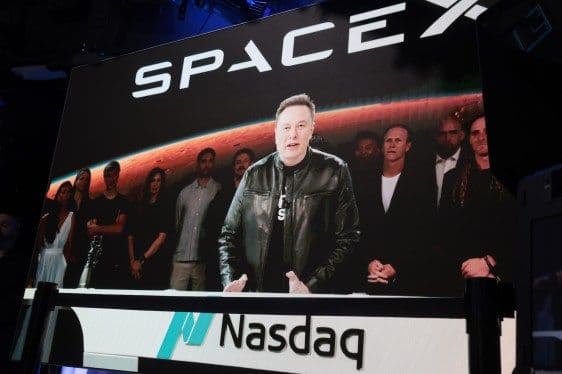
SpaceX is public: Everything you need to know post-IPO
SpaceX has captured the attention of media, investors, and the public for years now — interest propelled by the company’s reusable rocket launches and the rise of its Starlink satellite network, and, of course, for its founder and CEO Elon Musk. But in its 24-year history, nothing quite compared to its initial public offering. Everyone seemed interested — perhaps because of the sheer size of the IPO. The company priced its 555.6 million shares at $135 each to raise $75 billion, making it the largest IPO in history and turning Musk into theworld’s first trillionaire. That total raised figure would end up ballooning to $85.7 billion raised. TechCrunch has followed SpaceX’s start, struggles, and successes from the early days. And we’re here for what happens next too. Here is your go-to landing page for all the relevant SpaceX IPO news, including notable updates now that the company is public. SpaceX to acquire Cursor for $60B in stock: The deal was announced just days after the IPO. SpaceX passes Amazon as valuation balloons to $2.7T: SpaceX became the fifth-most valuable company in the world, after its stock price climbed 20% on June 15 and more than 8% in early trading Tuesday. SpaceX’s historic IPO just got supersized: The largest IPO in history grew to $85.7 billion raised. SpaceX shares opened June 12 at $150 on the Nasdaq public exchange, an 11% pop for the most anticipated debut in history. And it has continued to rise. The shares kept rising too. In midday trading, SpaceX shares soared 30%. SpaceX shares closed at$160.95, up 19%. There has been heavy trading volume, as expected. Robinhood said it has seen “record-breaking traffic” on its trading platform in the hours after SpaceX’s historic public markets debut. SpaceX COOGwynne Shotwell was interviewedby CNBC on June 12, and among the many interesting comments she made, here is one that might get the attention of Tesla shareholders: A “merger between SpaceX and Tesla might make Elon’s life a little easier.” Among the winners are the banks, which have brought in about$500 millionin total fees. The big winners are Goldman Sachs and Morgan Stanley, per the Wall Street Journal. Musk took to X, the social media company he owns, to share his appreciation of SpaceX employees as the stock rose. “I love the incredible people of SpaceX beyond words,”he wrote Friday afternoon. He also reposted a number of SpaceX IPO related posts, including a photo of insiders allwearing green shoesin what appears to be a nod to “the green shoe option.” This is a provision in an IPO underwriting agreement that lets underwriters sell up to 15% more shares than originally planned if demand is strong. To get a deeper look into what happened, and all the far-ranging implications of SpaceX now being a publicly traded company,senior reporter Sean O’KaneandAI Editor Russell Brandomsat down for a special episode of our Equity podcast, whichyou can listen to right hereor via your podcast player of choice, orqueue it up on YouTube here. With an offering this large, there is a lot of financial machinery operating behind the scenes — so the first question is when the stock will make it to the market to start trading. SpaceX is debuting on Nasdaq (see the official Nasdaq listinghere, which will have the price of record as soon as there is one). Nasdaq also has video of the SpaceX crewringing the bell, if that’s your thing. But the price is just one part of the picture. For the most up-to-the-minute information, your best bet is still financial press outlets likeBloombergandCNBC, both of which have live blogs running and will have close coverage of any hiccups that happen in getting the stock to market. Here we look at some of the bigger numbers, the consequential figures, and the eyewatering amounts that make up the company’s S-1 form. For instance, SpaceX lost $4.9 billion on revenue of over $18 billion in 2025. That’s only a fraction of the more than $37 billion lost since SpaceX’s inception. As CEO, Elon Musk holds about 85.1% of the company’s voting power. You can read more about that in the next section, “Who wins and who doesn’t” — and we’ll continue to drop interesting numbers in here. Here is another figure that caught our attention: 4,400. That’s the number of SpaceX employees who could become millionaires,according to the New York Times. Elon Musk can’t hear you over the sound of his $1.75 trillion IPO: The Equity podcast weighs in on the IPO. SpaceX is the world’s largest IPO in history and means a big payday for some investors, employees, and, of course, Elon Musk. Elon Musk becomes the world’s first trillionaire after SpaceX’s historic IPO: The SpaceX IPO has boosted Musk’s paper wealth to more than $1,000,000,000,000 at a time when he is more hated — and powerful — than ever.How Elon Musk will increase his power through the SpaceX IPO: Musk, who will have more than 50% of the voting power, will have a monarchical grip over the publicly traded version of SpaceX — control that goes far beyond what other tech founders enjoy. Who will benefit most from SpaceX IPO? Mostly Elon — and a few from his inner circle: Elon Musk has the largest stake in SpaceX by billions of shares, but others also stand to win. Here’s the rundown of who owns what. SpaceX SPV investors won’t know their true holdings until post-IPO lock-ups lift: After SpaceX makes its public debut, lower-tier SPV investors face hidden fees, lengthy payout delays, and the risk of outright fraud. The S-1 registration documentgave the world an unprecedented look inside SpaceX, including its financials and its various businesses. The S-1 continued to be amended as the IPO date approached, and we were on it. Here is what we found. The SpaceX IPO filing is filled with AI bets, Starship dreams, and Elon Musk at the center:The contents of the SpaceX IPO detail a business dominated by its Starlink satellite internet offering, more than $37 billion in losses, and future business prospects through its xAI division. Starship’s path to reusability looks murky after SpaceX’s S-1: SpaceX’s IPO and Starship rocket test flight delivered two big data points that offer a realistic vision for the coming years — and one that may disappoint both the company’s boosters and its critics. SpaceX warns investors of future dilution, adding fuel to Tesla merger rumors: The company added new language to its S-1, a warning to prospective investors that a major dilution could be in the cards after it goes public. Leading up to the IPO, SpaceX locked in a string of deals, mostly selling off compute to improve its balance sheet. Anthropic will pay xAI $1.25B per month for compute: Initial coverage of the Anthropic deal on May 20. How long is Anthropic’s lease with SpaceX? Opinions vary: Elon Musk keeps downplaying the duration of SpaceX’s contract with Anthropic. Google will pay SpaceX $920M per month for compute: A Google representative described the deal as a short-term deal addressing unexpected demand for its recently launched AI products. This article originally published at 10 a.m. ET, June 12, 2026. It has been updated with new coverage of the SpaceX IPO, share price moves, Cursor acquisition, and other related events.
View

Sixty percent of US consumers say ‘AI’ in brand messaging is a turnoff, survey finds
Getting cited by AI is easier than earning consumers’ trust, according toa new reportfrom WordPress VIP, the Automattic-owned company that offers an enterprise version of the WordPress publishing platform. As brands race to have their links appear in AI search results, consumers have grown more skeptical about whether they can actually trust the answers they’re getting. Per the report, 60% of consumers in the U.S. say that brands that use “AI” in their messaging are a turnoff, and 86% don’t fully trust AI and still want to explore original sources. Notably, 42% of consumers said that AI-generated answers without clear attribution are trusted less than airline fees, confusing privacy policies, and medical bills. Nearly three in four respondents said the internet feels “less human” than it did 10 years ago. Together, the findings paint a picture of a rapidly evolving digital landscape where brands are trying to adapt to a world beyond Google Search and traditional SEO, while also balancing the need to appear human-authored or risk losing their audience. As companies invest more in making their brand visible to AI search engines, consumers are placing greater value on transparency and attribution. “People used to build websites for other people,” said Brian Alvey, CTO of WordPress VIP, in a statement shared alongside the new report. “Now you have to build websites for AI agents acting on behalf of those people. If your site’s content isn’t legible to AI, you are invisible to a growing share of how people search. You don’t exist. And if your content doesn’t feel human and trustworthy for the tiny percentage of people who actually click past the AI answer engines, they won’t come back a second time.” The report is based on a survey of 2,000 respondents conducted in April, comprising 800 enterprise decision-makers and CMOs and 1,200 U.S. adults. Despite consumers’ wariness about AI, the report also found that AI referrals to sites were growing. Sixty percent of enterprise respondents said that traffic from AI search engines and answer platforms increased over the past year, and 74% of enterprise decision-makers said AI discoverability and attribution are a main or significant priority. WordPress VIP says the findings point to a future where brands will have to navigate both AI visibility and human trust simultaneously. The report found that 33% of consumers said clicking through to see an original source is still their top trust signal, and 80% said information on the web should remain openly accessible, rather than controlled by a small number of large organizations. The last finding aligns with Automattic’s broader push for an open web ecosystem, reflected in its backing of the open source WordPress projectandinvestmentsinopen web protocols, like ActivityPub.
View
Android 17 launches with new multitasking tools as Google expands Gemini features
Google on Tuesday released the final version of itsAndroid 17 operating system, as well as its counterpart for smartwatches, Wear OS 7. The latest release, which arrives first on its own Pixel devices, is also accompanied by a Pixel Drop, bringing new features that include support for the latest AI models, like the music generation model Lyria 3, the multimodal Gemini Omni, and speech-to-translation tools for the Pixel 10a with AudioLM. The latest feature release underscores Google’s strategy of using its Android and Pixel devices to showcase its latest AI technology. While its rival Apple is focused on catching up in AI with September’s public launch of AI upgrades to Siri and iOS 27, Google’s Android 17 is focused on its newest AI models, Gemini’s role in creation, communication, and other device experiences. In today’s Pixel Drop, Android Quick Share’s file-sharing feature will become compatible with Apple’s AirDrop on older Pixel 8a and 9a devices. Plus, Gemini Omni will now let you edit videos in a conversation, while Lyria 3 lets users create music tracks with text prompts and/or images in the Gemini app. Pixel 10a devices will also get better speech-to-speech translation tools with AudioLM. Other phone features are arriving, too, such as the ability to record a personalized outgoing audio message for callers when you can’t answer. Plus, the “Take a Message” feature will arrive in more global markets. The Pixel Drop brings emergency detection features to the Google Pixel Watch, as well, meaning that if the watch detects a car crash, fall, or lack of pulse, it will automatically contacts emergency services and your selected emergency contacts. Beyond AI, Android 17’s larger update allows users to take advantage of features like a “bubble bar,” which is a new user interface element that lets you organize, move, and then quickly access recent apps that appear as bubbles at the bottom of your screen. The feature is designed to help speed up app interactions and aid in multi-app workflows. Social media users may like Android 17’s new feature that lets them record themselves with the selfie camera and phone screen simultaneously for screen reaction videos that can be shared on platforms like TikTok, YouTube, Instagram, and others. Parental controls and security features were also improved in this latest release, adding a “Mark as Lost” feature in Find Hub, Live Threat Detection, and other threat defenses, alongside screen time limits and content filtering tools that can now be set with a PIN without linking a Google account. A new foldable gaming mode offers a 50/50 layout with a dynamic gamepad. Meanwhile, watch owners can now receive live updates from phone apps that mirror to the Pixel Watch. Smartwatches will also work better withGoogle’s upcoming AI glassesand other hardware, such as headphones. This summer, Wear OS will introduce more Gemini Intelligence features, like tools for making personalized widgets just by describing them, and it will be able to offer “Personal Intelligence” by connecting your Google apps and chat history with Gemini. Battery life improvements — up to 10%, Google claims — as well as multi-step automation will also arrive in the new Wear OS.
View

Meta Introduces AI Mode on Facebook With AI-Powered Search for Public Posts, Reels
Meta has introduced a new set of artificial intelligence features for Facebook, including AI Mode, a search experience that generates answers using information shared publicly across the company's platforms. The update also brings additional AI-powered tools for photo and video creation, along with new content suggestions. The company said the features are designed to help users discover information, create content and interact with Facebook more efficiently. Some of the new creative features rely on camera roll suggestions, which remain optional and can be disabled by users.
View
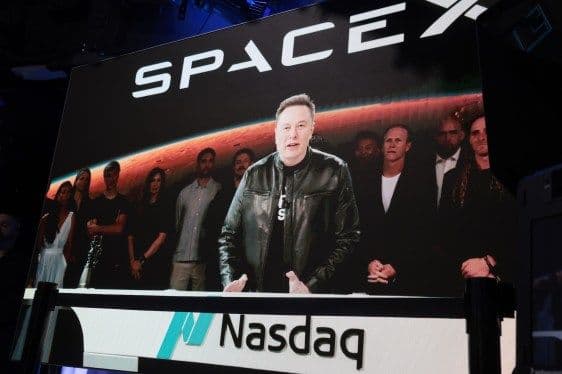
SpaceX to acquire Cursor for $60B in stock, days after blockbuster IPO
SpaceX hasagreedto acquire AI coding startup Cursor in a $60 billion stock deal, just a few days after the space company’s historic IPO and less than two months afterannouncing a tie-up between the two. The deal is meant to help SpaceX’s AI division — built around Elon Musk’s AI company xAI, which SpaceX merged with earlier this year — catch up to the major AI labs. Despite being a centerpiece of its IPO promises, SpaceX’s AI division has been in the midst of a restructuring after running into repeated controversies, like allowing users to generate non-consensual deepfakes of women and children. SpaceX said Tuesday that the acquisition is likely to close in the third quarter of this year. Before SpaceX came knocking, Cursor was on track to close a $2 billion funding round from the likes of Andreessen Horowitz, Thrive, and Nvidia that would have valued the AI coding startup at $50 billion, TechCrunch hasreported. Musk’s company announced a curious deal in April ahead of its IPO: it would either buy Cursor for $60 billion in stock, or pay a $10 billion break-up fee if the deal fell through. Cursor was growing fast when this deal was first announced. But one source told TechCrunch at the time that the $2 billion it was planning to raise wasn’t going to be enough to help it break even. That’s despite the startup previously raising $900 million in a Series C in June 2025, and another $2.3 billion in late 2025. Founded in 2022 as Anysphere, Cursor has been on a meteoric rise as AI-powered coding took off over the last two years. It went through OpenAI’s startup accelerator in 2024 before raising enough money to wind up with a price tag of around $29 billion before the SpaceX deal was announced. Signs of SpaceX’s interest in Cursor appeared earlier this year when xAI hired two of the startup’s senior engineering leaders. Then, in April, Business Insider reported that xAI had decided to rent out some of itsdata center capacity to Cursor— a hint of the similar deals that SpaceX struck with Anthropic and Google ahead of its IPO this year. Those conversations between SpaceX and Cursor quickly evolved into the deal that is being finalized now. The deal also happened at the same time that xAI was falling apart. All 11 of Musk’s co-founders in xAI had left the company by the end of March, and Musk publicly admitted that xAI “was not built right [the] first time around” and that he was rebuilding it “from the foundations up.” This followed xAI’s Grok chatbotcalling itself“MechaHitler” in 2025, and allowing users to generate nudes and sexual deepfakes of women and childrenearlier this year. SpaceX told investors in its IPO filings that behavior like this is a risk to its business, and the company currently faces a number of legal challenges as a result of these actions. xAI’s teardown started as SpaceX started moving toward what would become the biggest IPO in history. In that process, SpaceX and its bankers pitched investors on the idea that the company faced a total addressable market of around $28 trillion. Nearly all of that — $26 trillion — was centered around the company’s AI efforts. SpaceX told investors that it sees a potential $2.4 trillion AI infrastructure business (including its stated plans to build a satellite constellation that handles AI compute) and a $22.7 trillion opportunity in “enterprise applications.” SpaceX is now leaning on Cursor to deliver on some of these promises. But the prospect of acquiring the startup must have seemed even easier to swallow post-IPO: Since going public last Friday, SpaceX’s stock has gone from its IPO price of $135 per share to more than $200 per share in pre-market trading as of Tuesday morning, adding nearly $1 trillion — or roughly 16 Cursors — to its valuation in the span of just a few days.
View

Probably raises $9M to build a more reliable kind of AI
As LLMs have grown more powerful, hallucinations have proven stubbornly difficult to avoid. Errors pop up in even the smartest models, and while there are ways to catch those errors, the industry is still figuring out the best way to do it. Probably, which just raised $9 million in seed funding from Andreessen Horowitz, is trying to build a more rigorous way to catch those errors. As founder Peter Elias (pictured above) puts it, the company’s goal is to prevent hallucinations and simple factual errors from ever reaching the user, and achieve the kind of 99.99% accuracy that’s common in deterministic systems but much more difficult to reach with AI. As it turns out, bringing LLMs to that level of accuracy requires rethinking many of the basic assumptions of AI engineering. Probably’s first product is a data science tool, built to produce quick answers from complex datasets. Each result comes with a citation and an audit trail for how it was developed, an increasingly common practice among AI tools. But keeping errors from creeping into those summaries required an elaborate harness system that Elias describes as a “data science mech suit.” The LLM’s first-pass answers are checked against a deterministic validator system, which bounces back any results that don’t match the dataset. Crucially, the LLM has been trained against the validator, and the whole system is optimized for fast and accurate answers, the company said. “What we learned building this was that the better your harness engineering is, the weaker the model can be,” Elias says. “If you can refine the context enough, the model does not have to work very hard to do the right thing. Basically, it’s an exercise in reducing ambiguity.” That allows Probably’s data science tool to run on significantly smaller AI models. Elias says the current version is running on a model that’s “four classes weaker than the frontier models,” which means it can be run on local hardware (that is, a desktop computer instead of a data center), which reduces a huge amount of the token costs associated with AI use. It’s a welcome idea at a time when token costs are rising and many customers arereassessing their AI budgets. And, Elias’ idea doesn’t end with data science, as the same engine can be extended to cover use cases like accounting or medical services — as Elias puts it, “any precision-sensitive use case.” “I think it’s really interesting that the big AI labs have not even attempted to do this,” Elias says. “They’re incentivized not to, because they make money the more times you have to correct the model.”
View

SpaceX passes Amazon as valuation balloons to $2.7T
SpaceX passed Amazon to become the fifth-most valuable company in the world, after its stock price climbed 20% on Monday and more than 8% in early trading Tuesday, pushing its valuation past $2.7 trillion. That’s despite Amazon turning a $78 billion profit in 2025 on $717 billion in sales last year, compared to SpaceX’s $4.9 billion loss on $18.7 billion in revenue. SpaceX has recently added new revenue streams in the form of compute leasing deals with Anthropic and Google, though, and the company has added $1 trillion to its valuation since going public on Friday. Tuesday’s stock price jump came after SpaceXannouncedit is acquiring AI coding startup Cursor in an all-stock deal worth $60 billion. SpaceX first revealed a collaboration with Cursor in April, at a time when CEO Elon Musk said his AI company xAI — now a part of SpaceX — “was not built right [the] first time around” and that he was rebuilding it “from the foundations up.” SpaceX’s historic IPO saw it debut with a valuation of around $1.7 trillion, and the transactionraisednearly $86 billion for Musk’s company. SpaceX only made about 4% of its total shares available for trading, which experts predicted would make the stock more susceptible to wild swings.
View
From Near Bankruptcy to the Biggest IPO in History
The company that once survived on a single successful rocket launch is now at the centre of a trillion-dollar bet on space, AI, and humanity’s future beyond Earth.
View