Latest AI News

EXL Strengthens India Presence with Expanded Chennai AI Hub
The expansion reflects EXL’s broader AI strategy with nearly 60% of the company’s revenue now generated from data and AI services, according to company executives.
View
LTM Launches AI-Native Managed Services Platform as it Looks Beyond Manpower-led Delivery
As AI reshapes IT services, LTM's new agentic AI platform aims to automate technology operations and reduce dependence on traditional manpower-led support.
View
Google DeepMind Publishes Roadmap to Superintelligence
Researchers argue progress beyond human-level AI could come through scaling, self-improvement, paradigm shifts, or multi-agent systems.
View
Equal AI Raises $30 Mn Led by Prosus Ventures, Tomales Bay Capital to Scale AI Call Assistant
Equal AI will expand its AI assistant platform as it scales its consumer business and deepens its presence in India's growing AI applications market.
View
‘Human Capital Does Not Become Less Valuable as Token Capital Grows,’ Says Satya Nadella
The Microsoft chief warned against a future in which a handful of AI models capture most of the economic value created by AI.
View
What is UiPath’s Moat in 2026?
“UiPath is no longer an RPA company. We are an RPA plus process orchestration plus solutions company,” says CTO Raghu Malpani.
View
As AI companies race to go public, who else is along for the ride?
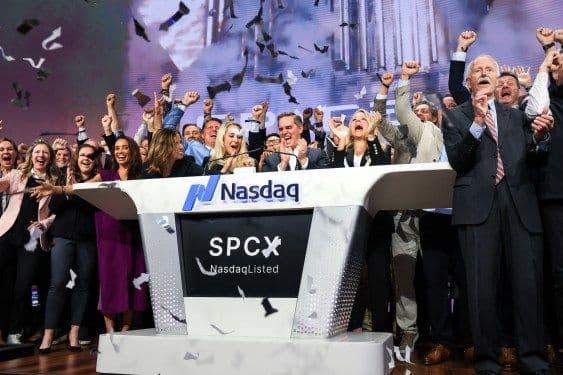
SpaceX went public this week inthe largest IPO ever, making CEO Elon Muskthe world’s first trillionaire. Despite its name, SpaceX has been emphasizing the potential ofits costly AI business, and competitorsOpenAIandAnthropicmay soon follow with their own public market debuts. So on the latest episode ofTechCrunch’s Equity podcast, Kirsten Korosec, Sean O’Kane, and I discussed what’s looking like a hot IPO summer. “We have SpaceX not only sucking up just a huge chunk of the money that’s available on public markets, but also really stress testing the limits of what a public company can be and how much it can be controlled by one single person,” Sean said. “My eye is really on these other tech companies that will go public and how much they will try to emulate.” Kirsten also noted that there are other startups trying to “ride that SpaceX IPO wave,” for example by raising money for orbital data centers after SpaceX helped to popularize the concept. “So there’s a ripple effect that’s happening throughout the market that I think is probably even more interesting than just the headline, ‘SpaceX makes Elon a trillionaire,’” she said. Keep reading for a preview of our conversation, edited for length and clarity. Anthony Ha:I want to zoom out a little bit from just the SpaceX IPO, because beyond the Elon Musk of it all, it’s the beginning of what could be a [series] of different IPOs for different AI companies. We’ve talked about Anthropic confidentially filing to go public, and now OpenAI has done the same. How excited are either of you about this? Kirsten Korosec:I want to start off by saying that I love Julie Bort’s story, which I think sums it up pretty nicely. It’s a great headline, so I’m gonna read it here: “It’s not FAANG anymore, it’s MANGOS.” FAANG being Facebook, which is now Meta; Amazon; Apple; Netflix; Google, now Alphabet. Now it’s shifted, and we’ve got Meta, Anthropic, NVIDIA, Google, OpenAI, SpaceX. [We’ve still got] massive tech companies, surely, but there is a shift here, right? First of all, we’ve got a bunch of AI labs in there, and that’s very different. Netflix gets booted out of there, a giant streaming service. And so to me, it’s an interesting shift in terms of public markets and the vast amount of money and capital available in the public markets shifting away from consumer [and] social networks and towards, specifically, AI labs and other, more innovative deeptech, such as SpaceX. So I think that’s the most interesting thing — aside from the fact that this summer is going to keep us all very busy as reporters, more than probably any other summer in a while. Sean O’Kane:You know, once upon a time I wanted to be a lawyer, and one of the reasons I didn’t was because I hated the paperwork that was going to be involved. And here I am looking forward to reading hundreds more pages of SEC filings this summer — talk about a beach read. It’s a moment we’ve been anticipating for a while. We’ve spent the last few years really wondering if the IPO market was going to quote-unquote “open back up” after a lot of consternation about private markets, and mockery about people reaching their like Series [whatever] fundraising round. This is a good stress test — I mean, “good,” take that word however you want — a good stress test of public markets in general. We have SpaceX not only sucking up just a huge chunk of the money that’s available on public markets, but also really stress testing the limits of what a public company can be and how much it can be controlled by one single person. My eye is really on these other tech companies that will go public and how much they will try to emulate. A thing that I keep saying and thinking about with SpaceX is, they’re really trying to take some of the most extreme aspects of Google and Meta’s original IPOs back in the early 2000s and mashing it up with that “We’ll lose money forever” with Amazon. And I’m curious how much Anthropic and OpenAI will try to do the same. Will they remake themselves in the image of SpaceX? Or will they try to put themselves in a different light? Anthony:One aspect that really got driven home as I was reading about the OpenAI IPO is also the extent to which some of this is also a bit of a race in terms of timing. I think we can confidently say at this point, SpaceX is first out the gate, which probably has some advantages and disadvantages. It’s also a bit of a different company because it’s billing itself as an AI company, but obviously has a bunch of other stuff going on, too. But there is a sense in which, at least according to some analysts, OpenAI and Anthropic may both want to go before the other one, because there’s only a finite amount of capital, a finite amount of interest. At some point some of these valuations have to start coming back down to Earth, and so they may both be scrambling to be first. Kirsten:I mean, there’s very much a race between Anthropic and OpenAI. You’re even seeing OpenAI talk about slashing prices, and they’re certainly going to be competing on the IPO calendar. But that is very short-term thinking. If they’re smart, they should be much more concerned about the long-term play here. To me, what’s really interesting is while Anthropic, OpenAI, and SpaceX all prepare for these moments, there are a host of other companies out there that are raising money on the backs of the success of companies like SpaceX, or going into SPACs. Just today, for instance, or as we’re recording this, a company calledQuantum Space is doing a SPACand absolutely trying to ride that SpaceX IPO wave. We’ve got a host of other startups that our reporter Tim Ferholz has reported on that are clearly — they’re not going to go public, right? But if SpaceX is successful with space data centers, they’re raising money off of that potential and they’re building businesses on that potential. So there’s a ripple effect that’s happening throughout the market that I think is probably even more interesting than just the headline, “SpaceX makes Elon a trillionaire.” Sean:The commonly accepted theory in Silicon Valley is that AI is remaking the economy, but because of itsuse. AI is actuallyalreadyremaking the economy — just because of how people are trying to build it. We have everything that you just described, we have these other companies rushing to public markets. And I think that’s a really good point to think about: Will they ever regret rushing to public markets? But we even have companies like Ford and General Motors who are pivoting their unused battery creation capacity to be energy providers for data centers. And Ford’s stock shot up when it announced what is honestlya pretty modest-looking energy storage business, in comparison to something like Tesla. And Tim De Chant had a really great series of stories this week aboutGM’s pivot, as well. The economy’s already being remade. Whether that’s durable, again, that’s the question, but it’s happening right now. Kirsten:That is actually a really good point, because to me, I want to say five, six, seven, eight years ago, there were all these headlines of “the next Tesla killer” and these automakers and other companies are still chasing trying to recreate all these various businesses, and specifically the strategies of Elon Musk-based businesses. They haven’t learned their lesson. I wish I could communicate this to all the automaker CEOs out there: I get it that you have a lot of unused batteries and you want to pivot to something else, but trying to model your business after Tesla or SpaceX and others, it doesn’t always work. Perhaps look elsewhere. Sean:So Ford shouldn’t get into space data centers. Is what you’re saying? Kirsten:No, they shouldn’t. But just watch. This is going to happen.
View

As Anthropic suspends access to new models, India debates its AI future
Anthropic’s sudden move tosuspend access to its newest AI models following a U.S. government directivehas raised fresh questions across the global technology industry. In India, the decision has reignited a long-running debate over whether one of the world’s largest AI markets can afford to rely on technologies built and controlled elsewhere. Theannouncementcame late Friday, when Anthropic said it had received the U.S. government directive requiring it to suspend access to itsrecently launched Fable 5 and Mythos 5models for all foreign nationals, including its own foreign national employees. The move came shortly after the company announced apartnership with Indian IT services giant Tata Consultancy Servicesto expand enterprise AI adoption in India, underlining how closely the country’s AI ambitions have become tied to technologies developed and governed in the U.S. While the broader implications remain unclear, some reports said the initial security concerns werefirst reported to the government by Amazon CEO Andy Jassy. And The Informationsaidthe White House is unlikely to extend similar restrictions to other AI companies and is privately blaming Anthropic’s handling of alleged jailbreak vulnerabilities. Anthropic has disputed the government’s characterization and argued the action should not have been taken. Regardless, the development has triggered debate among Indian founders, investors, and policy experts over whether the country should accelerate efforts to build domestic AI capabilities, deepen investment in open-source alternatives, or continue relying on a handful of U.S. frontier model providers. For some, the episode is a wake-up call on technological dependence. For others, it is a reminder that access to increasingly critical AI systems can be shaped by geopolitical decisions beyond India’s control. India has become one of the most important markets for frontier AI companies. Anthropic and OpenAI have both described the South Asian nation as theirsecond-largest marketafter the U.S., reflecting its growing importance in the global AI race. The companies have alreadyset up their officesin India,expanded local hiring,partnerships, andenterprise initiativesin recent months, betting on India’s vast base of developers, startups, and businesses to accelerate adoption of their latest technologies. For many in India’s technology sector, Anthropic’s Friday announcement was about more than just one AI company. It reopened questions about the country’s long-term AI strategy and whether India could afford to remain dependent on a small number of foreign frontier AI providers. “It completely changes things,” said Aakrit Vaish, founder of Indian AI venture platformActivate, referring to Anthropic’s decision. “I think this materially changes the way all of us should be thinking about sovereign AI in India.” Vaish told TechCrunch that he woke up on Saturday morning “shocked and confused” by the announcement and said it strengthened the case for developing domestic AI capabilities. He expects startups to increasingly turn to open-source models and plans to encourage companies in his portfolio to reduce their dependence on a small number of frontier AI providers. For some founders, the bigger concern was what restrictions on frontier AI access could mean for competitiveness. Vijay Rayapati, co-founder and CEO ofAtomicwork, told TechCrunch that the episode highlighted the risks facing startups whose teams span multiple countries if access to advanced AI systems increasingly becomes subject to geopolitical restrictions. Atomicwork has around 25 employees in the U.S., though much of its product engineering team is based in Bengaluru, India. “If your AI team is not made up entirely of U.S. citizens, you are at a competitive disadvantage,” Rayapati said, arguing that unequal access to frontier AI models could give some companies a significant edge over rivals. The concern comes as parts of India’s tech sector are already grappling with questions about how AI could reshape the economics of global talent. This week, U.S. real estate technology company Opendoorshut its India officeless than two years after expanding in the country, with CEO Kaz Nejatian citing a push to bring operational work closer to customers in the U.S. and a shift toward smaller AI-native teams. While Opendoor did not specify how much of the decision was driven by AI-related efficiencies, the move added to a broader debate about how advances in AI could affect the future of global technology work and what that might mean for India’s position as an engineering talent hub. In addition to startups and AI builders, the Anthropic episode also prompted a broader debate among India’s technology leaders about dependence on foreign AI infrastructure. Sridhar Vembu, founder of Indian SaaS company Zoho, said the move showed that “technology is the ultimate weapon” and urged Indian organizations to increasingly embrace smaller and open-source models. “What can our government do right now? Ensure that orgs in India embrace smaller models, both Indian and Chinese open source ones,” Vembuwroteon X. Investor and former Infosys executive Mohandas Pairespondedto Vembu on X, arguing that the development highlighted the need for a far more ambitious national AI strategy and calling on the government to substantially increase investments in AI, computing infrastructure, and deep technology. “We are way behind and need a national mission to get going quickly,” Pai wrote, urging the government to create an annual ₹500 billion (about $5 billion) fund for AI and deep tech, alongside a ₹2 trillion (around $21 billion) credit guarantee program to support cloud infrastructure, hardware, and semiconductor development. Pai’s proposal would dwarf India’s existing AI efforts. In 2024, New Delhiapprovedthe IndiaAI Mission with an outlay of ₹103.72 billion (about $1.2 billion) over five years, aimed at expanding compute infrastructure, supporting startups, and developing indigenous AI capabilities. Despite growing interest in AI and New Delhi’s push to develop domestic capabilities, India remains a relatively small player in frontier model development. Only a handful of startups are pursuing foundational AI models, includingSarvam, whichreleased open-source modelsearlier this year. However, another high-profile AI startup,Krutrim,pivoted toward cloud and AI infrastructure servicesafter initially positioning itself around foundational model development. Much of India’s AI ecosystem has instead concentrated on applications and specialized models built on top of existing foundation models. Recent examples include Avataar AI, whichlaunched a video-generation modelearlier this week aimed at providing a lower-cost alternative to offerings from rivals including Google’s Veo, Kling, Luma, and Runway. Not everyone agrees that the primary challenge is a lack of capital. Responding to Pai’s comments, Lightspeed partner Hemant Mohapatra argued that the biggest constraints to building globally competitive AI companies are talent, access to computing resources, and execution, rather than simply the size of investment commitments. Mohapatra estimated that training a frontier AI model could cost anywhere from hundreds of millions to several billion dollars, depending on the approach, but said successful AI companies have historically scaled their capital requirements over time as adoption grew. Yet for some policy observers, the implications extend well beyond AI startups or model providers. Prasanto Roy, a New Delhi-based technology policy expert who advises multinational companies, said the episode would likely reinforce concerns within the Indian government about strategic autonomy, comparing it to the lesson many countries drew from Russia’s loss of access to SWIFT and other parts of the global financial system following its invasion of Ukraine. He told TechCrunch that the move was likely to provoke a significant nationalist backlash in India and described it as a poorly considered decision by Washington, with consequences extending far beyond Anthropic itself. “Even if this is corrected or reversed, the Anthropic episode shows there’s no such thing as a geopolitically neutral foreign LLM,” Roy said. “American AI models are bound to American geopolitics.”
View
Meta reportedly moves to unwind $2B Manus deal after Beijing’s demand
Meta has begun dismantling its $2 billion acquisition of Manus, completing an operational separation from the Chinese-founded AI startup and halting data sharing between the two companies. This is the most concrete step yet toward complying with a divestiture order Beijing issuedroughly two months agoon national security grounds. Meta has cut Manus off from its internal systems,Bloomberg reported,preventing employees from using Manus tools for internal projects as the two companies move toward a full separation. Meanwhile, according toMay reports, the co-founders of Manus have held preliminary discussions about raising approximately $1 billion from outside investors to reclaim the startup from Meta, a move that could pave the way for a Chinese joint venture structure and an eventual listing in Hong Kong, a venue that has seen a surge in AI listings this year for Chinese AI startups likeMiniMax and Zhipu. What was supposed to be a landmark exit for Chinese AI is quickly unraveling. The move underscores Beijing’s determination to retain control over strategically sensitive technology, regardless of a company’s offshore incorporation. In addition to the forced divestiture, Chinese authorities have sinceexpanded travel restrictionsto researchers and executives at private firms, requiring government approval before heading abroad. China isalso tightening its grip on foreign capital, with reports indicating that top AI firms, including Moonshot AI, StepFun, and ByteDance, will need government sign-off before accepting U.S. investment, adding another layer to Beijing’s sweeping effort to control its AI sector. Even as Meta moves to sever ties with Manus, the agentic AI startup has continued to ship new features, rolling out integrations withSimilarwebandShopify. Manus drew widespread attention with a viral agent demo relocated its staff to Singapore in mid-2025 before announcing a $2 billion acquisition by Meta in December. Chinese regulators moved to scrutinize the transaction earlier this year, citing potential violations of technology export controls and foreign investment rules. Manus investors, including California-based venture firm Benchmark, have already received their proceeds from the acquisition, while Asian backers, including Tencent, HSG, and ZhenFund, have indicated they will cooperate with the unwinding process, according tothe WSJ. Manus’ Chinese origins with parent company Butterfly Effect drew scrutiny on both sides of the Pacific, with SenatorJohn Cornynquestioningwhether American capital should flow to a Chinese-linked firm. Meta and Manus did not immediately respond to a request for comment outside regular business hours.
View
Amazon CEO reportedly raised Anthropic model concerns before government crackdown
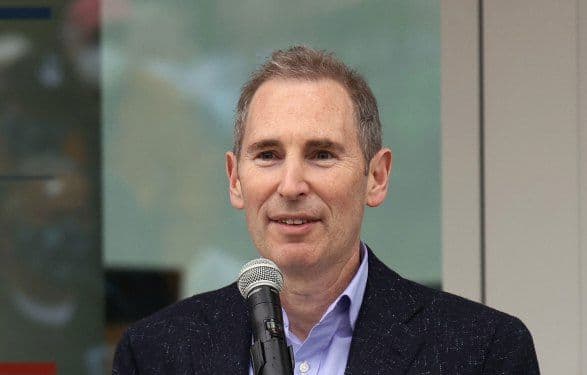
Amazon CEO Andy Jassy may have been the source of security concerns that ledAnthropic to cut off worldwide access to two modelson Friday. The Wall Street Journal reports thatJassy told Treasury Secretary Scott Bessent and other government officialsthat Amazon researchers used Anthropic’s Claude Fable 5 to obtain information that could be used in cyberattacks. The government subsequently imposed an export control ban on the Fable 5 and Mythos 5 models. An Amazon spokesperson said in a statement that while it’s “not uncommon for governments to seek our counsel on potential security risks,” the company does not “share the details of those discussions.” The spokesperson also pointed toan updatestating that AWS has been affected by the model cut off. The InformationandReuterssimilarly reported that Amazon (amajor Anthropic investor) had communicated concerns about the security of Anthropic’s models. David Sacks, Trump’s former AI czar who now co-chairs the President’s Council of Advisors on Science and Technology, offered his own account of the discussions,claimingthat “a highly credible trusted partner of both Anthropic and the USG […] came forward with a jailbreak.” Sacks added, “The Admin asked [Anthropic CEO Dario Amodei] to fix the jailbreak or de-deploy the model. Dario refused.” Anthropic said ina blog postthat the capabilities apparently causing government concern are already available in other publicly accessible models. This post has been updated with a statement from an Amazon spokesperson.
View
KPMG pulls report on AI usage due to apparent hallucinations
Professional services firm KPMG has pulled a report titled, “Redefining excellence in the age of agentic AI,” after numerous organizations said the report’s claims about their AI usage were untrue. Research group GPTZero identified a number of inaccuracies in the report, which was published in October 2025. GPTZerotold the FT that the inaccuracies stemmed from AI hallucinations. In other words, the professional services firm appears to have used AI to help write a report about AI. UBS, the UK’s National Health Service, Swiss Federal Railways, and Transport for London all told the FT that the report’s claims about their AI usage were either untrue or misleading. A KPMG spokesperson said the firm removed the report from its websites while conducting its own investigation. “We expect all our people to follow our guidelines on the responsible use of AI, including human oversight to validate content and verify independent sources,” the spokesperson said. Last month,EY withdrew a report on loyalty rewards programsthat appeared to include fake footnotes and AI hallucinations.
View
OpenAI faces investigation from state attorneys general
A coalition of state attorneys general has reportedly opened an investigation into OpenAI. The company wasserved with a subpoena from New York’s attorney general on Friday, according to The Wall Street Journal. That subpoena sought documents related to a broad range of topics including the company’s advertising, user engagement and retention, model sycophancy, handling of consumer data and health data, and treatment of minors and seniors. TechCrunch has reached out to OpenAI and the New York attorney general’s office for confirmation. A company spokesperson told the WSJ that OpenAI is cooperating with the investigation. “AI is a new and powerful technology, and we work every day to safely bring its benefits to people in a responsible way,” the spokesperson said in a statement. “We take the concerns raised by state attorneys general seriously and intend to engage constructively with their offices.” According to Bloomberg, the spokesperson also said that ChatGPT now “includes a more protective experience for minors and people experiencing difficult situations, with safeguards that direct them to real-world resources and trusted human contacts.” The company declined to specify which states are involved in the investigation or to share more details about what information was requested. OpenAI recentlydefeated its co-founder Elon Muskin a high-profile trial, after Musk accused the company of violating its founding agreement. (Musk’s lead attorney said he will appeal the decision.) However, OpenAI still faces lawsuits over everything fromalleged copyright infringementtoChatGPT’s alleged role in suicide. Earlier this month, Florida Attorney General James Uthmeiersued OpenAI and its CEO Sam Altman, claiming that OpenAI and Altman “ignored internal and external safety warnings, put children at great risk, and allowed a dangerous product to reach millions of Floridians.” Altman recentlyapologized to the community of Tumbler Ridge, Canadaafter a mass shooting; he acknowledged that OpenAI failed to alert law enforcement after the company flagged and banned the suspected shooter’s ChatGPT account. The company announced this week that it hasfiled confidentially to go public.
View